
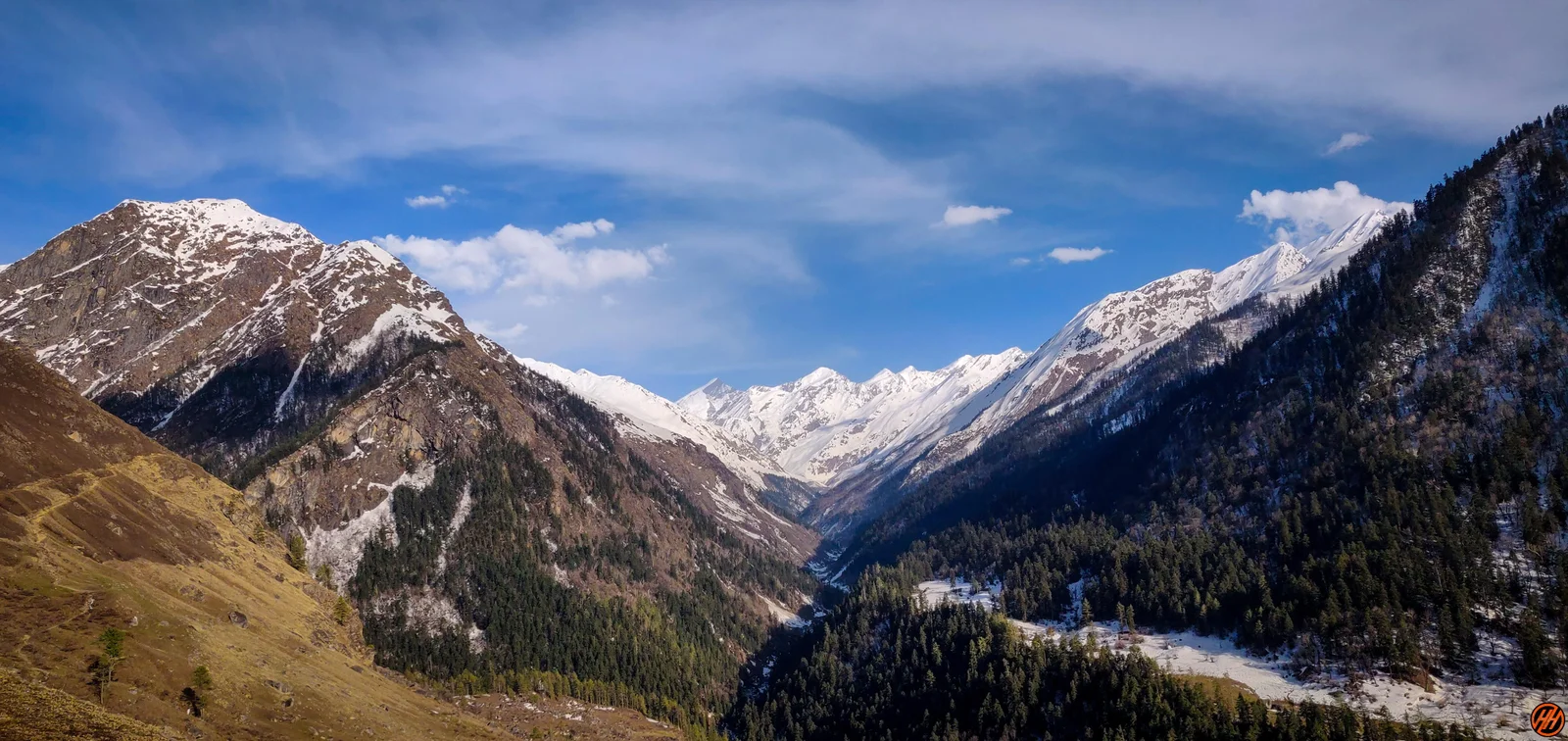
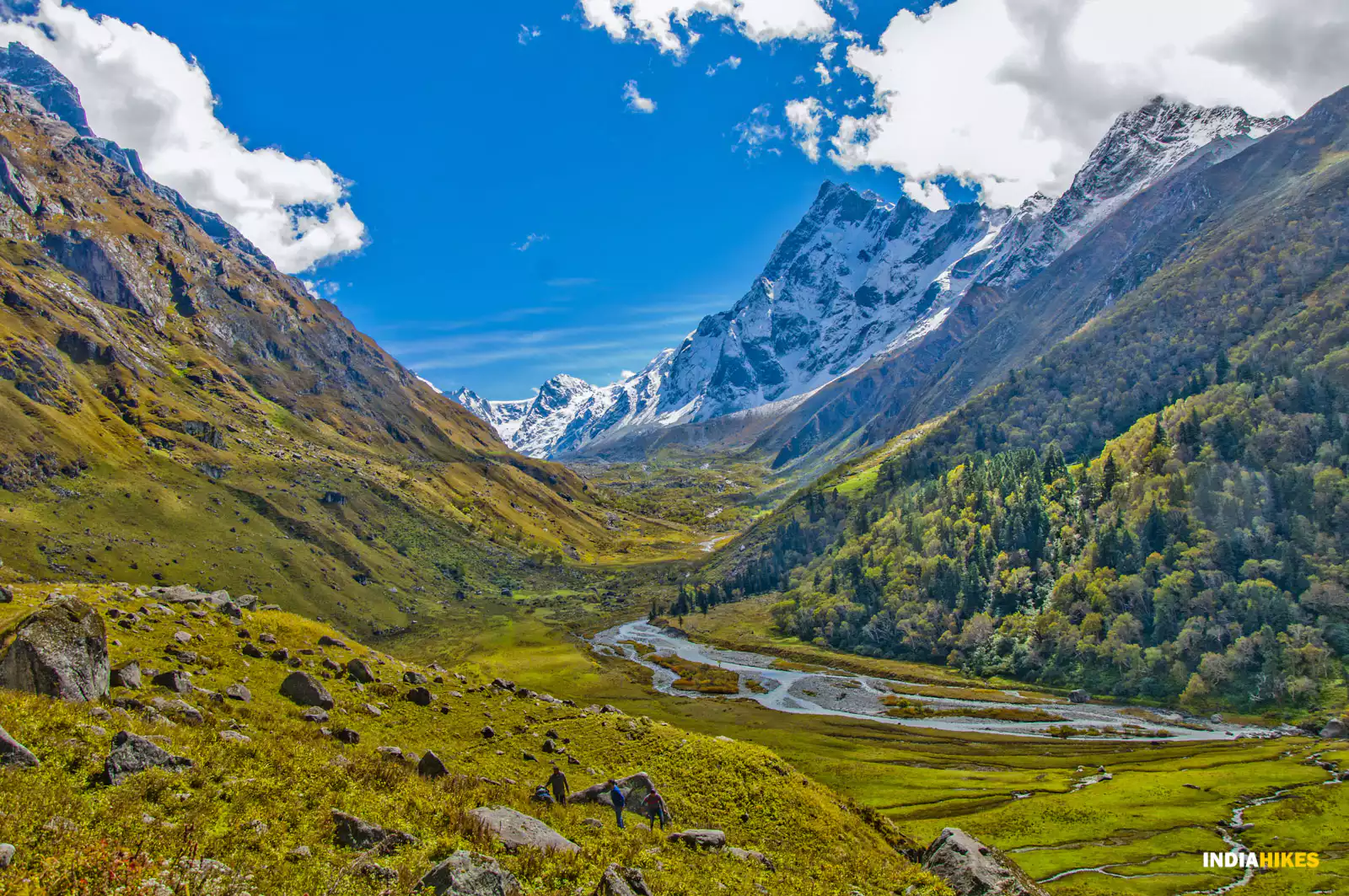


Har Ki Dun — "Valley of Gods" — is one of Uttarakhand's most storied trekking destinations. Set within the Govind Wildlife Sanctuary in the Garhwal Himalayas, this ancient valley is believed to be the route the Pandavas took to heaven. In winter, it transforms completely — blanketed in 2–5 feet of snow with frozen streams and ice-draped pine forests.
The winter version of this trek is dramatically different from summer — you trek through living villages with ancient wooden architecture, witness the spectacular Swargarohini peak draped in snow, and sleep under skies that blaze with stars at 3,500m. A deeply immersive Himalayan winter experience.
2–5 ft Deep Snow
December to February brings stunning deep powder snow — an entirely different world from summer.
Ancient Living Villages
Osla & Gangad villages with 400+ year old wooden temples and traditional Jaunsari culture.
Swargarohini Peak Views
Clear views of the legendary Swargarohini massif — "Route to Heaven" of the Pandavas.
Hanging Glaciers
The unique hanging glaciers that dangle from ridgelines — a surreal winter spectacle.
Govind Wildlife Sanctuary
Thick oak and deodar forests blanketed in snow — home to snow leopards and Himalayan birds.
Winter Stargazing
At 3,500m in winter, the Milky Way blazes across an ink-black, pollution-free sky.
Dehradun to Sankri (1,920m)
Pick-up from Dehradun/Mussoorie. Scenic 8–9 hour drive through Uttarkashi district to Sankri village — the base camp for Har Ki Dun. Arrive by evening, check-in to guesthouse, briefing by trek leader.
Sankri to Taluka to Seema (2,600m)
Drive to Taluka (1.5 hrs) then trek begins through Govind Wildlife Sanctuary. Pass by the Supin river on snow-laden trails through pine and oak forest. Camp at Seema village.
- 7:30 AM: Breakfast at Sankri
- 8:30 AM: Drive to Taluka roadhead
- 10:00 AM: Trek begins through snow forest
- 1:00 PM: Packed lunch by Supin river
- 3:30 PM: Arrive Seema village camp
- Evening: Snow walks, explore village
- 7:00 PM: Hot dinner, fire, acclimatization talk
Seema to Osla Ancient Village (2,780m)
Trek through deep snow trails to Osla — a living medieval village of ancient wooden houses and the stunning Duryodhana Temple. Trek is moderate with beautiful ridge-line views of Swargarohini.
Osla to Har Ki Dun Valley (3,566m)
The crown jewel — trek into the snow-carpeted Har Ki Dun valley! The hanging glaciers, frozen streams and Swargarohini massif views make this one of India's most spectacular winter landscapes.
- 6:00 AM: Pre-dawn breakfast (early start)
- 7:00 AM: Begin climb in deep snow
- 9:30 AM: First views of hanging glaciers
- 11:30 AM: Enter Har Ki Dun Valley meadow
- 12:30 PM: Arrive summit camp at 3,566m
- Afternoon: Valley exploration, photography
- Evening: Sunset on Swargarohini — magical
Rest & Explore Har Ki Dun Valley
Full day at leisure in the valley. Optional acclimatization hike toward the Swargarohini glacier base. Photography in the surreal winter landscape. Wildlife spotting — snow leopard pugmarks possible!
Har Ki Dun → Osla → Seema
Descend through the valley, retracing through Osla village. A different perspective on the descent — the mountains look entirely different going back. Camp at Seema for the night.
Seema → Taluka → Sankri → Dehradun
Final trek to Taluka, then drive back to Sankri and onward to Dehradun. Arrive by late evening. The Valley of Gods stays with you long after you leave — guaranteed.
Included
Not Included
Standing in that valley with 4 feet of snow all around, Swargarohini gleaming in the morning light above hanging glaciers — I've done 15 treks and nothing prepared me for this. MilesNPeople's winter gear and experienced guide made all the difference in those conditions.
The ancient village of Osla buried under snow with smoke rising from wooden chimneys — it looked like a scene from another century. The valley in full winter white is completely surreal. Can't believe this is still a relatively hidden gem in India.
Daytime temperatures: -5°C to +5°C. Night temperatures at high camp: -15°C to -20°C. We provide quality sleeping bags rated to -20°C. Bring multiple layering systems, good quality gloves, balaclava, and insulated trekking boots. It's cold — but absolutely worth it!